

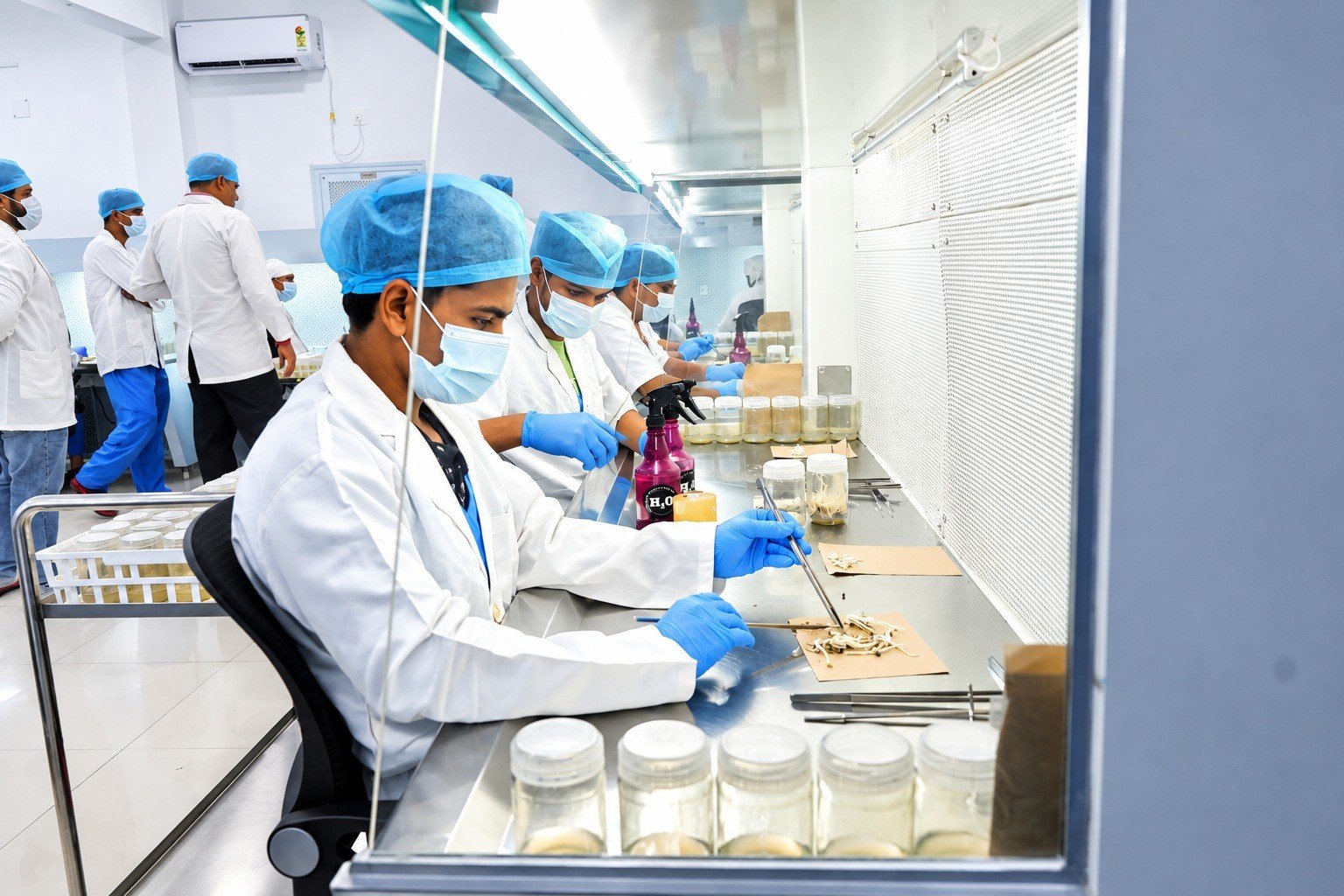
Micropropagation is the commercial form of tissue culture. It follows a series of stages, each with its own purpose and conditions.
Stage 0: Selecting the mother plant
Everything starts with a healthy, true-to-type plant. Choosing well here matters, because every plantlet produced afterwards will be based on it.
Stage 1: Establishment
A small piece of tissue, called an explant, is cleaned, sterilised and placed on a nutrient medium under a laminar air flow cabinet. The aim is to obtain a clean, growing culture.
Stage 2: Multiplication
The established culture is divided and transferred to fresh medium several times. At each transfer, new shoots form, increasing the number of plantlets available.
Stage 3: Rooting
Shoots are moved to a medium that encourages root formation. Well-rooted plantlets are far better prepared for the transition out of the vessel.
Stage 4: Acclimatisation (hardening)
Plantlets are moved out of the laboratory into a growing mix under protected conditions and gradually exposed to normal light and humidity.
Stage 5: Field-ready plants
After primary and secondary hardening, established plants are graded and prepared for nursery, plantation or field planting.
Each stage relies on clean working practices, controlled conditions and careful observation. Quality at every step adds up to healthier plants at the end.